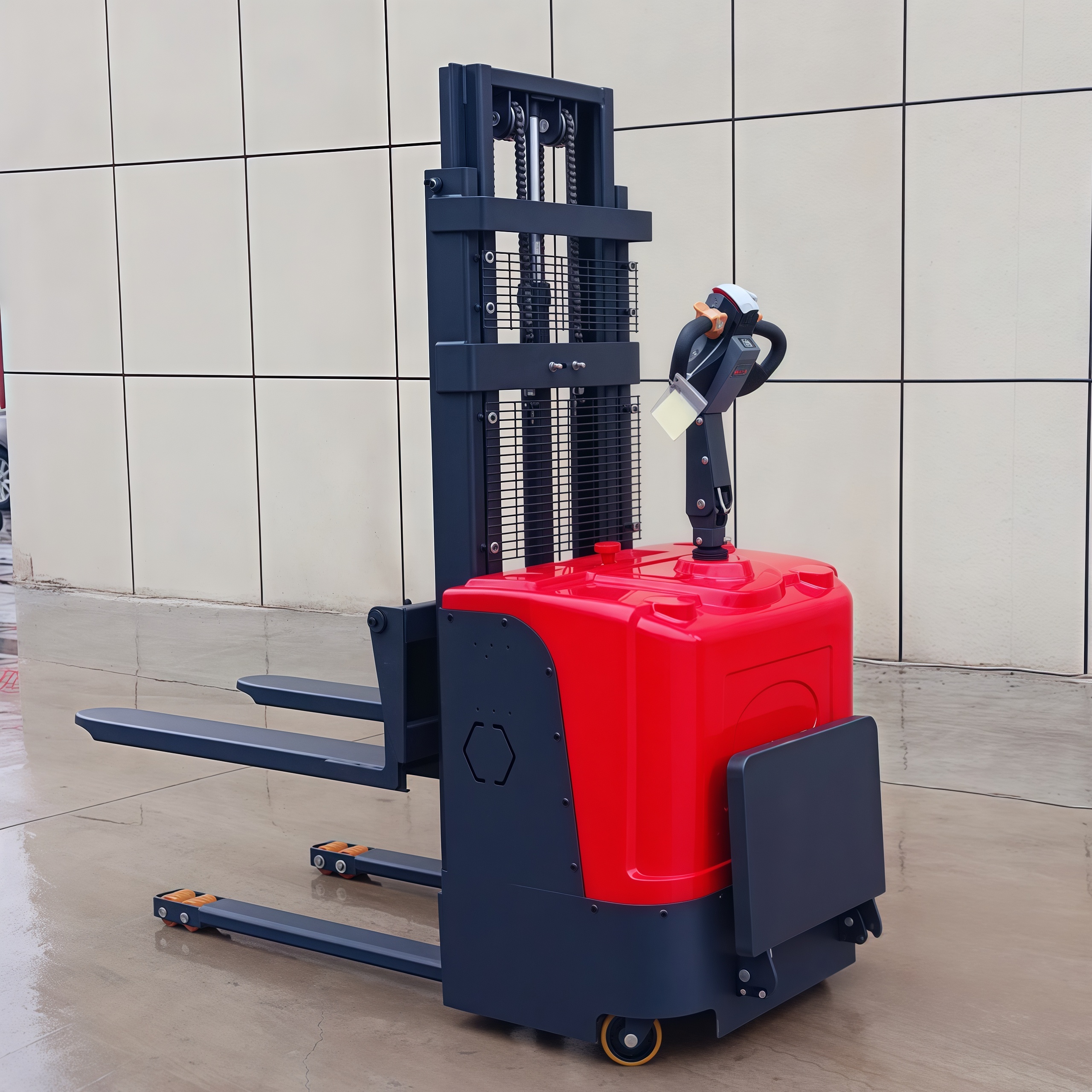
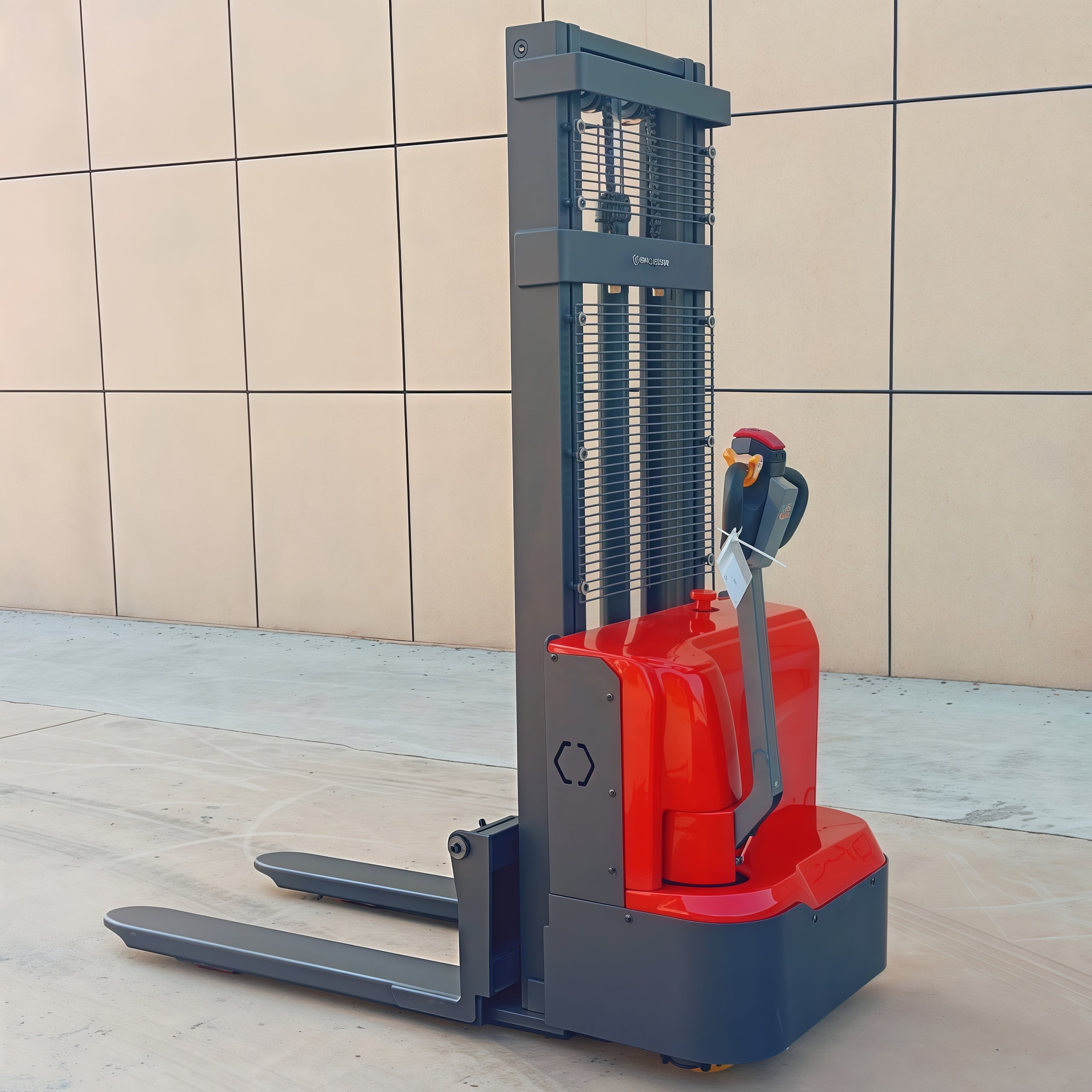
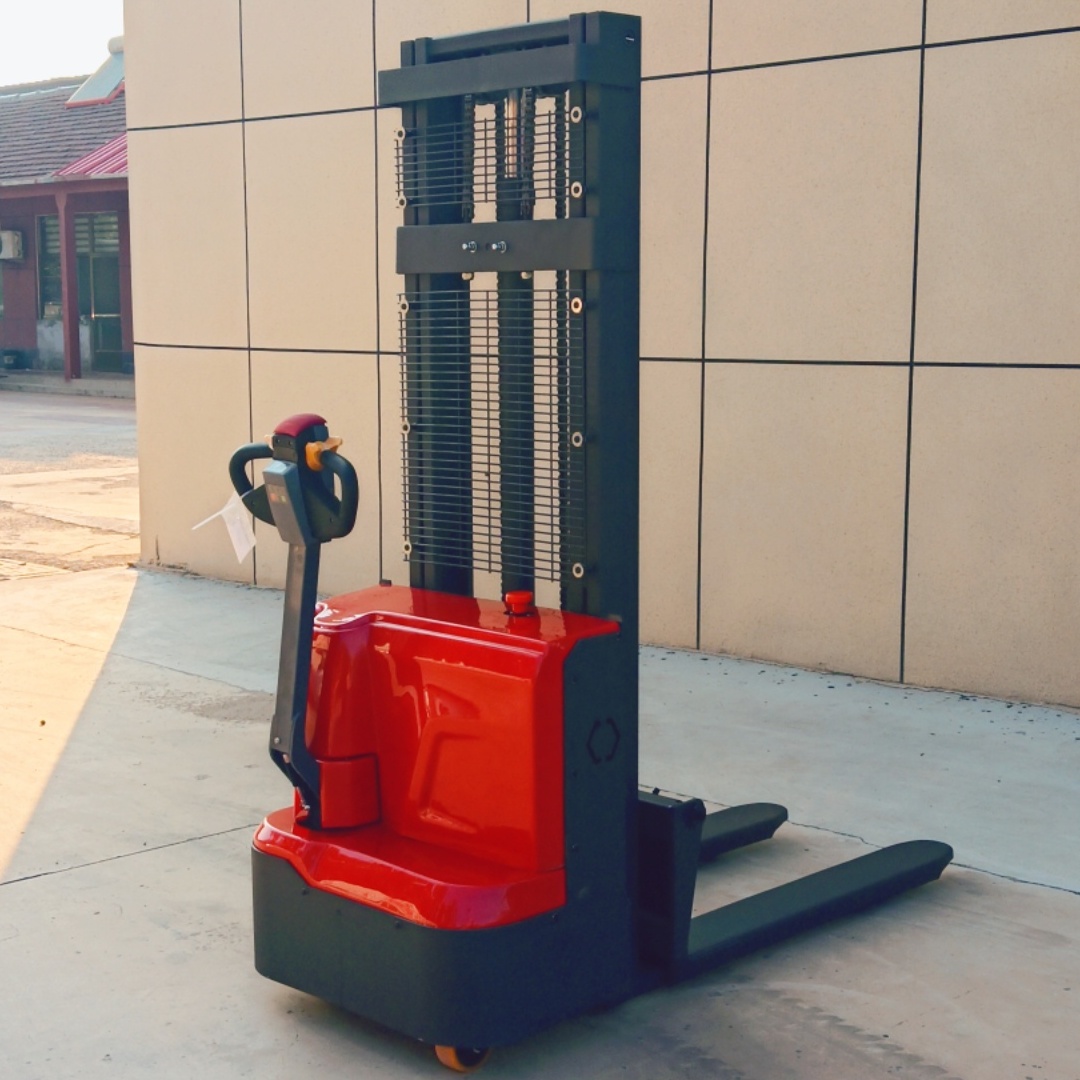
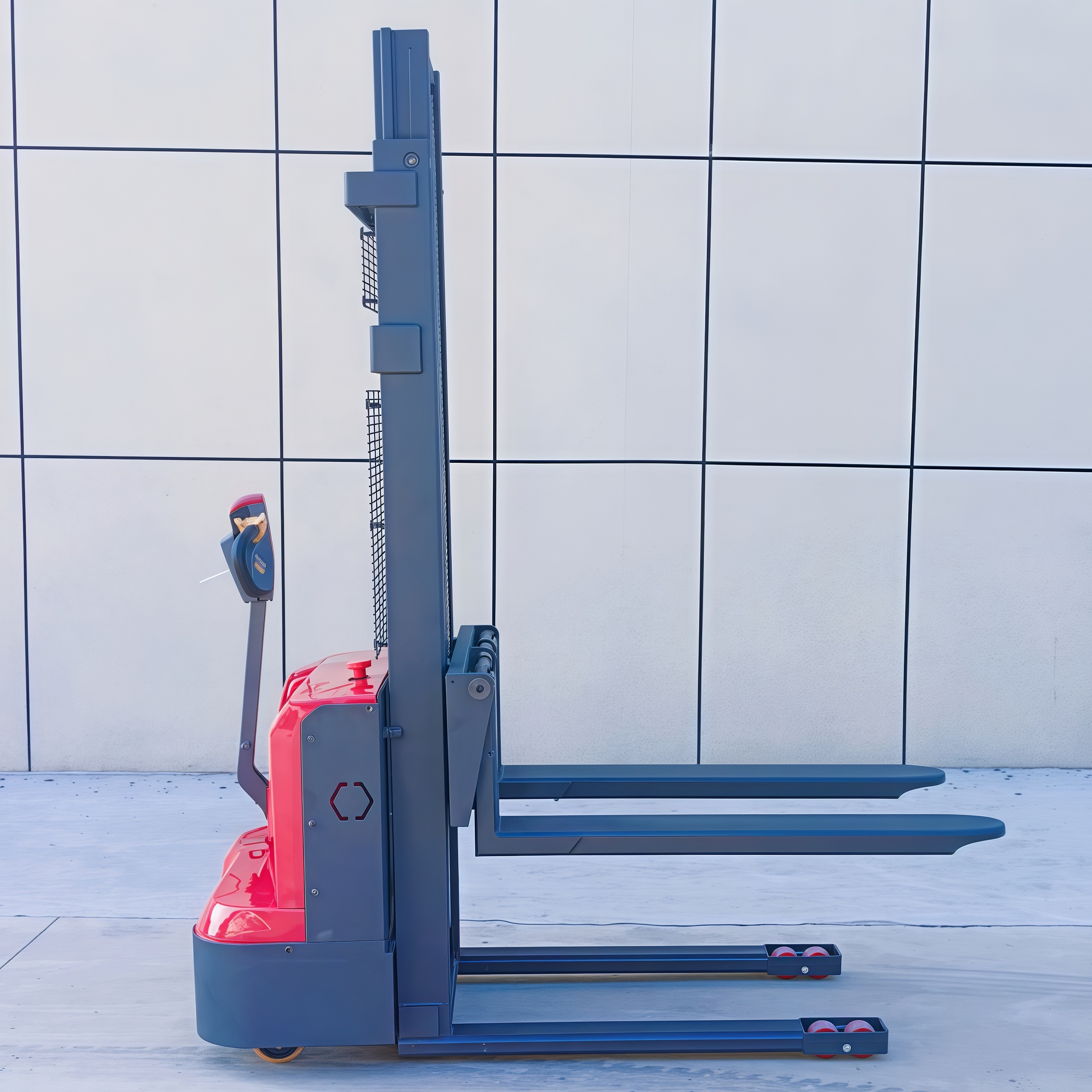
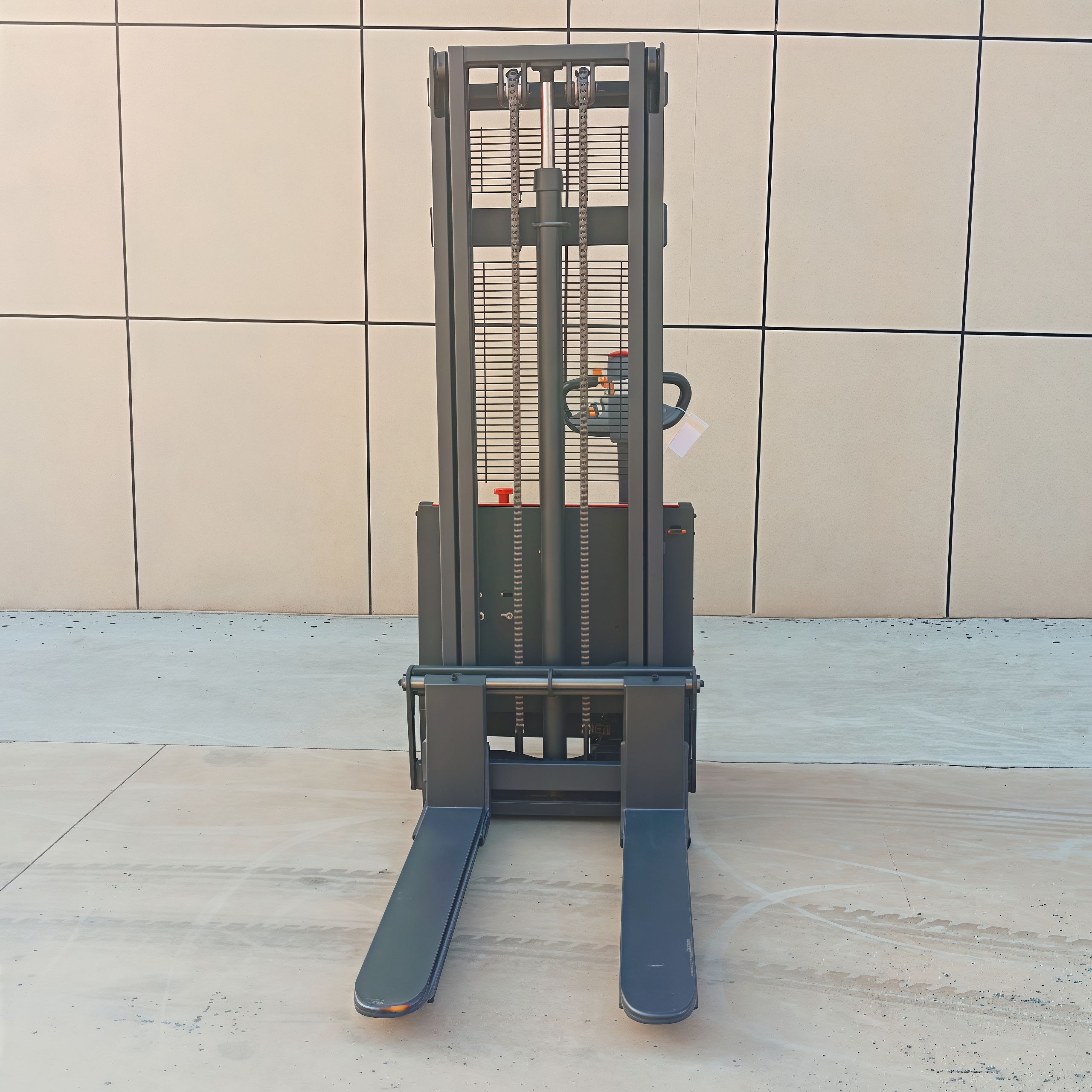
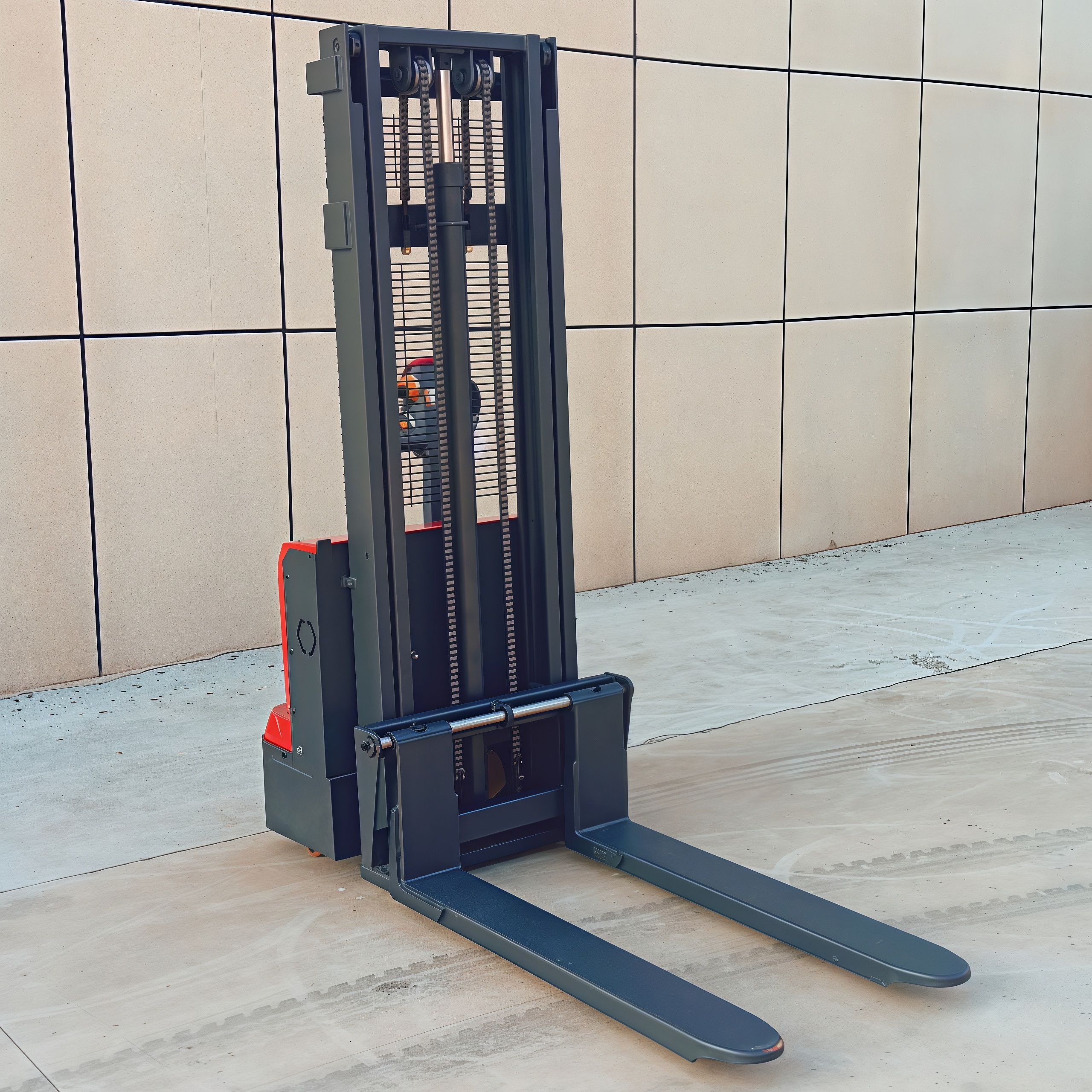
Comprehensive electric stacker lineup: 1–2 ton capacity, 3–6m lift height, up to 12m options.
Capacity Range
1 ton, 1.5 ton, and 2 ton models for light to heavy load requirements.
Lifting Heights
3m to 6m standard, plus 12m high-lift models for high-level storage needs.
Versatile Fit
From mini lift to high lift manual stackers suitable for every storage rack.
In terms of capacity and dimensions, the electric stacker lineup is comprehensive. It features the electric stacker 1.5 ton, electric pallet stacker 1 ton, and electric stacker 2 ton to match various load requirements, such as a 1500 kg stacker forklift or a 1000kg self lift stacker. Lifting heights are equally adaptable, with models offering a stacker 3 meter, stacker 4m, electric stacker 5m height, or even a stacker 6m lift for high-level storage. This includes the electric pallet stacker 5000mm, stacker forklift 12m, and pallet stacker 4.5m, ensuring there is a stacker like the mini lift stacker or high lift manual stacker for every storage rack.
Applications:
The 1.5-ton (1,500 kg) electric stacker is a pivotal piece of material handling equipment, expertly engineered to bridge the gap between basic manual handling and larger, more complex forklifts. It is designed for operations that require consistent, efficient lifting and moving of medium-weight palletized goods, offering a perfect blend of power, maneuverability, and clean operation.
This stacker is the workhorse of numerous indoor environments. Its most common application is in warehouses and distribution centers, where it excels at loading and unloading trucks, transporting goods from receiving areas to storage racks, and fulfilling orders. The clean, zero-emission electric operation makes it indispensable in sectors like the food and beverage, pharmaceutical, and textile industries, where product contamination from exhaust fumes must be avoided. Furthermore, its relatively compact size and excellent maneuverability allow it to operate effectively in the confined spaces of retail stockrooms and manufacturing assembly lines, supplying workstations with components.
The core of the 1.5-ton electric stacker's performance lies in its robust 48V electrical system, which provides ample power for smooth lifting and travel, even with a full load. Operators benefit from intuitive controls for lifting, lowering, and direction, significantly reducing physical strain and fatigue compared to manual alternatives.
A critical differentiator is the power source. While traditional lead-acid batteries offer a lower initial cost, modern lithium-ion (Li-ion) batteries are increasingly popular. Li-ion options provide opportunity charging (topping up during breaks), require zero maintenance (no watering), and have a longer lifespan, maximizing uptime and providing a better long-term investment.
The design prioritizes efficiency and space savings. Most models are walk-behind or stand-on, granting them a very tight turning radius to navigate narrow aisles with ease. Lifting heights typically range from 3 to 5.5 meters, allowing for effective use of vertical storage space in high-bay warehouses.
The economic advantages are substantial. The Total Cost of Ownership (TCO) is significantly lower than that of internal combustion alternatives. Operators save massively on energy costs (electricity vs. fuel) and benefit from greatly reduced maintenance—no engine, oil, filters, or spark plugs to worry about. This combination of lower operational costs, enhanced productivity, and improved workplace safety through quieter operation and zero emissions makes the 1.5-ton electric stacker a smart, sustainable choice for modern business.
In conclusion, the 1.5-ton electric stacker is a versatile, economical, and powerful solution that boosts productivity while creating a cleaner and safer working environment. It is an essential asset for any business looking to optimize its material handling processes.
Advantages:
It produces zero emissions, ensuring a clean and safe working environment for indoor operations like warehouses and food processing plants.
The electric motor operates quietly, significantly reducing noise pollution and creating a more comfortable atmosphere for operators and surrounding staff.
It offers substantially lower operating costs compared to fuel-powered models due to cheaper electricity and requires less maintenance.
Its compact and maneuverable design, often as a walk-behind or stand-on model, allows for easy operation in confined spaces and narrow aisles.
Features like self-loading capabilities, precise lifting control, and lithium-ion battery options enhance both operator productivity and ease of use.
| Serial number | Product model | Unit | Specification |
| Basic Information | product model | CDD | |
| Power type | electric | ||
| driving pattern | Pedestrian mode | ||
| load rating | 1000 / 1500 / 2000 | ||
| load center | mm | 475/575 | |
| Tire parameters | PU wheel | PU | |
| Drive wheel dimensions (diameter * width) | mm | 210*75 | |
| Balance wheel dimensions (diameter * width) | mm | 128 * 50 | |
| Sizing of the carrying wheel (diameter * width) | mm | 80 *70 | |
| Number of drive wheels / balance wheels / load-bearing wheels | mm | 2001/1/4 | |
|
Basic size |
lift height | mm | 1600 / 2000 / 2500 / 3000 |
| Overall vehicle height (lowest position of the forks) | mm | 2080 / 1580 / 1830 / 2150 | |
| Overall vehicle height (maximum height of the forks) | mm | 2080 / 2570 / 3080 / 3580 | |
| Height of the fork from the ground (lowest position of the fork) | mm | 90 | |
| Overall vehicle length | mm | 1950 | |
| Overall width of the vehicle | mm | 800 | |
| Effective fork length (forged fork) | mm | 1150(customizable) | |
| basic size | mm | 180(customizable) | |
| The maximum adjustable external width of the fork | mm | 700(customizable) | |
| Turning tadius | mm | 2300 | |
| Total Weight | kg | 355/400/440/465 | |
| Performance | Maximum traveling speed (loaded/unloaded) | Km/h | 4.2/5.1 |
| Acceleration rate (loaded / unloaded) | mm/s | 100/135 | |
| Carrying the maximum climbing gradient | Mm/s | 70/110 | |
| brake mode | % | 6 | |
| Maximum traveling speed (loaded/unloaded) | electromagnetic brake |
1. Q: What is the main advantage of an electric stacker over a manual one?
A: The primary advantage is greatly reduced physical effort and increased productivity. The electric power takes care of lifting and driving, allowing the operator to work faster, for longer periods, and with less fatigue, especially when moving heavy loads.
2. Q: What lifting capacity and lifting height do I need?
A: Electric stackers commonly come in capacities ranging from 1,000 to 2,500 kg, with lifting heights up to 4-6 meters. You should choose based on the weight of your typical loads and the height of your storage racks. It's crucial to select a model that exceeds your maximum requirements for safety and efficiency.
3. Q: Is special training required to operate an electric stacker?
A: While generally simpler to operate than a full-size forklift, formal training is highly recommended for safety. Operators need to understand the controls, load capacity, stability principles, and how to maneuver safely in your specific work environment.
4. Q: How long does the battery last, and how is it charged?
A: Most electric stackers are designed to last a full 8-hour shift on a single charge. They use a removable 24V battery that can be plugged into a standard wall outlet. A full charge typically takes 8-10 hours.
5. Q: Can it be used on ramps or slightly uneven surfaces?
A: Most electric stackers are designed for smooth, indoor surfaces like warehouse floors. While they can handle gentle, paved ramps, their small wheels and design make them unsuitable for rough or significantly uneven terrain, which can be a safety hazard.
6. Q: What is the cost difference between a walk-behind and a rider model?
A: Rider models are typically more expensive than walk-behind models due to their larger size, more complex controls, and higher capacity. The choice depends on your budget and whether operator comfort and travel speed over long distances are priorities.
7. Q: How much maintenance does an electric stacker require?
A: Maintenance is minimal compared to engine-powered equipment. It primarily involves:
Keeping the battery charged.
Regular inspection of forks, wheels, and the load chain.
Checking for loose connections and keeping the machine clean.
8. Q: Can this stacker be customized for my specific needs?
A: Yes, many manufacturers offer common customizations such as non-marking tires for sensitive floors, different fork lengths or widths, backup cameras, or specialized attachments. It's best to discuss your specific application with the supplier
Copyright © Shandong Laite Machinery Co., Ltd.@2025 - Privacy Policy

 EN
EN