

 EN
EN
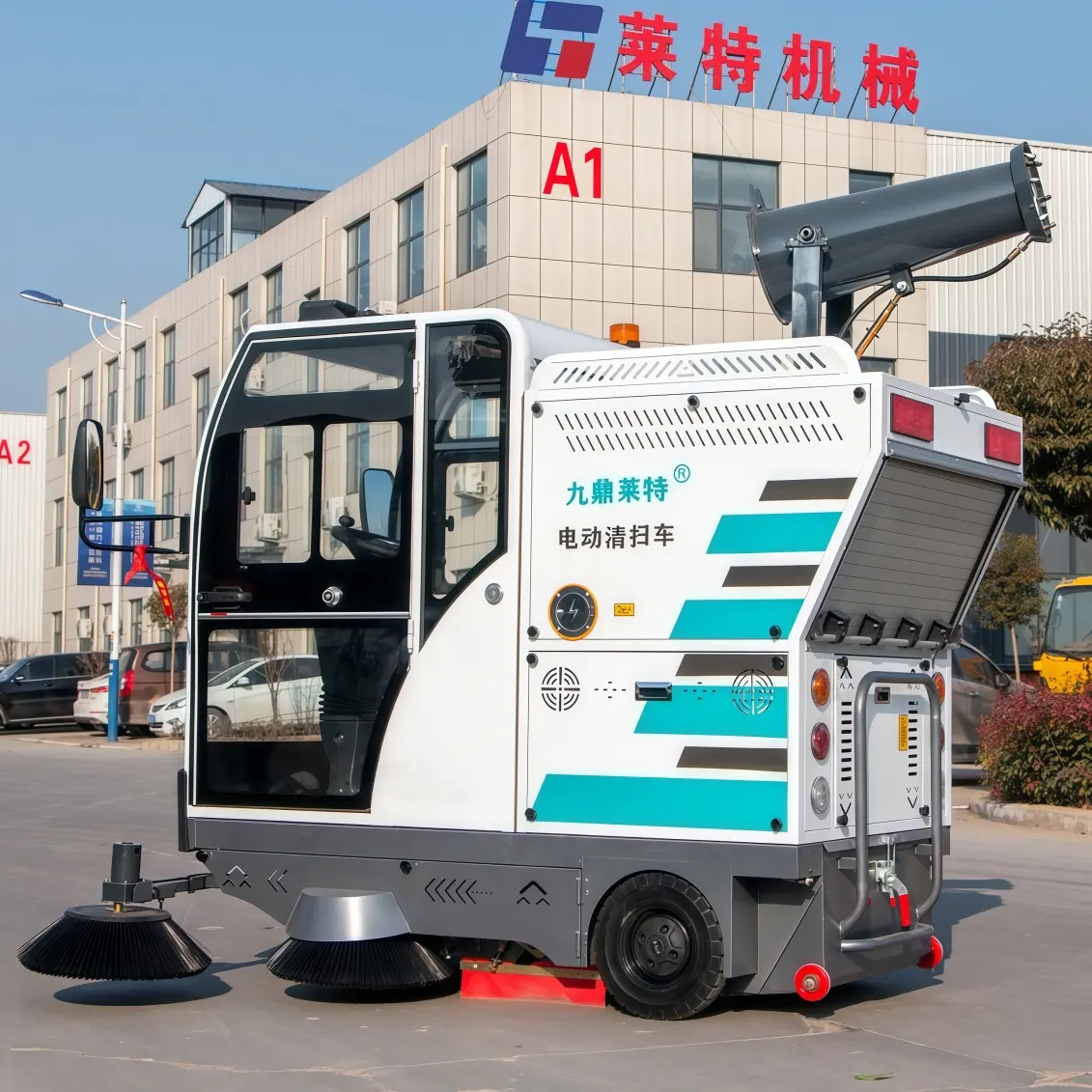
Core Dust Suppression Mechanisms in Road Sweeper Technology
Aerodynamic Containment and Negative-Pressure Capture
The best road sweepers these days come equipped with vacuum systems for controlling dust, creating a sort of low pressure area around the sweeping brushes. What happens is that this pulls dust and dirt down into sealed filters instead of letting it float around everywhere. Independent tests actually back this up, showing containment rates reaching about 85% in some cases. The machines also feature enclosed brush compartments which keep air moving in one direction, so dust doesn't escape onto sidewalks or roadsides. This matters a lot when working close to people walking by, near schools, or in places where wildlife might be affected. Studies indicate that with proper shielding, dust levels drop somewhere between three to five times lower than what we see with older models that have exposed brushes.
Water Atomization vs. Dry Fog: Matching Droplet Size to PM10/PM2.5 Targets
Effective suppression hinges on aligning droplet size with target particulate dimensions. Pressurized water atomization (50–200 µm droplets) captures larger PM10 particles via inertial impaction, while dry fog systems (5–20 µm droplets) engage sub-2.5 µm PM2.5 through Brownian diffusion. Modern units integrate humidity sensors and variable-flow regulators to switch modes autonomously:
| Suppression Method | Target Particle Size | Water Usage | Efficiency Range |
|---|---|---|---|
| Pressurized Atomization | PM10 (≥10µm) | 25–40 L/km | 78–92% |
| Dry Fog Diffusion | PM2.5 (<2.5µm) | 15–25 L/km* | 65–80% |
| *With recapture systems |
Field validation confirms that precise droplet-to-particle matching prevents 93% of secondary dust plumes during vehicle acceleration—cutting water use by 40% versus legacy spray bars while meeting China’s GB 3095–2012 ambient air quality thresholds.
Real-World Performance of Integrated Road Sweeper Suppression Systems
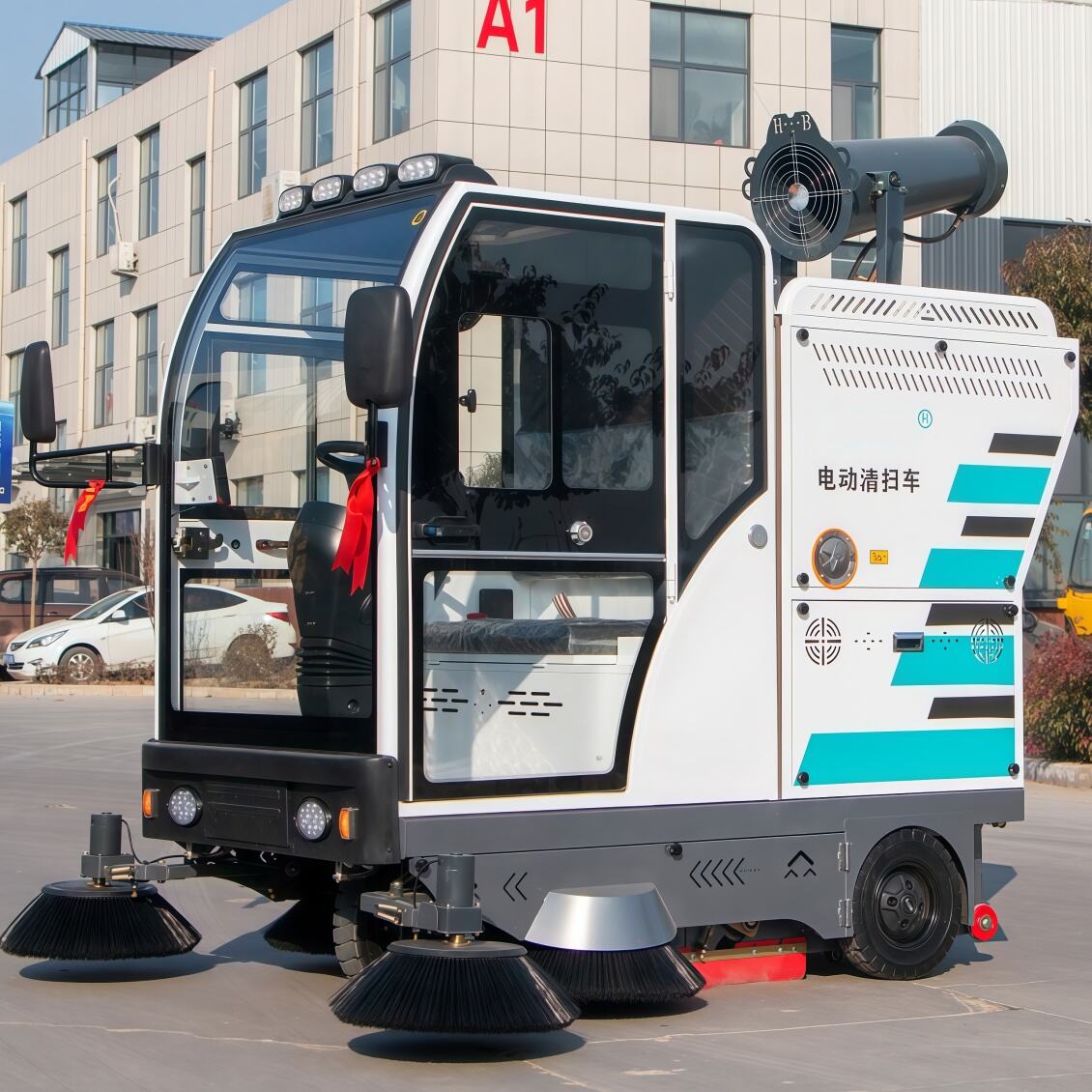
Shandong Laite LT-9000E: Dual-Stage Nozzles and Humidity-Adaptive Control
The LT-9000E comes equipped with dual stage nozzles where the first stage throws out bigger droplets to grab most of the big particles, then follows up with super fine mist that gets into those tiny PM2.5 stuff. The whole system has this smart humidity control feature that automatically tweaks how much water flows through depending on what's going on around it. According to some tests done last year in the Clean Air Journal, this setup actually cuts down water usage by about 18 percent while still doing just as good job at keeping dust under control. For companies operating in places where local governments are getting stricter about water restrictions whether they're in dry areas or wet ones, this kind of adaptive technology makes a real difference in staying compliant without breaking budget constraints.
Jinan Field Trial Results: 92.7% PM10 Reduction at Operational Speed (30 km/h)
The city of Jinan ran a full year test on their air quality system and saw some impressive results. When running at normal speeds around 30 km/h, the combined suppression methods cut down PM10 particles by nearly 93%. What's really interesting is that the system still worked well over 90% efficiency even during busy traffic times when winds would come up suddenly from different directions. This shows how solid the wind containment design is and how smart the fluid delivery adapts to changing conditions. Cities looking to clean up their air should take note of these findings since they prove these kinds of systems can be reliable solutions for managing pollution in urban areas based on actual performance data rather than just theory.
Regulatory and Environmental Drivers for Road Sweeper Suppression Innovation
China’s GB 3095–2012 Amendments and Their Impact on Onboard Water Efficiency
Recent changes to China's GB 3095-2012 air quality regulations have pushed city equipment standards higher, now demanding over 80% reduction in particulates during regular street sweeping. To comply with these new requirements, equipment makers have been busy redesigning their dust suppression systems. They're not just trying to hit the numbers on paper either. Many companies are also tackling real world problems like water shortages that plague more than half of all Chinese cities. Some pretty clever solutions are emerging from this challenge. We're seeing things like systems that capture and reuse moisture, controls that adjust based on humidity levels, and nozzles designed to maximize effectiveness while using less water. These improvements cut down on fresh water consumption by around 30 to 40 percent. From an operator standpoint, this means less time spent refilling tanks, extended periods between maintenance stops, and ultimately saving money over time. What's interesting is how these environmental regulations actually end up making operations run better too.
Next-Generation Road Sweeper Suppression: AI, Sensing, and Adaptive Calibration
LiDAR-Triggered Spray Activation in Laite’s SmartSweep Platform
Laite's SmartSweep system employs real time LiDAR technology to sense how much dust is floating around in the air, then turns on misting only at specific spots where it actually needs to work. This approach stops the constant spraying that wastes so much water, cutting usage down by about 30 percent while still grabbing 95% of those tiny PM2.5 particles. The built in artificial intelligence keeps adjusting things like droplet size, pressure levels, and how the mist spreads out depending on what the sensors are reading right now. This prevents areas from getting too wet and makes sure resources get used efficiently even as weather conditions change throughout different parts of town. What we end up with is something completely different than old methods that just sprayed everywhere all the time without thinking. Now we have a system that knows exactly when and where to act based on actual conditions rather than guesswork.
FAQ
What is negative-pressure capture in road sweepers?
Negative-pressure capture involves creating a low-pressure area around the sweeping brushes, pulling dust and dirt into sealed filters, which effectively contains them.
How do modern road sweepers match droplet sizes to PM10/PM2.5?
They use pressurized water atomization for larger PM10 particles and dry fog systems for sub-2.5 µm PM2.5 particles, adapting to particulate size with integrated sensors and regulators.
What is the advantage of humidity-adaptive control in road sweepers?
It optimizes water usage by automatically adjusting water flow based on environmental humidity, which reduces water usage while maintaining dust control efficiency.