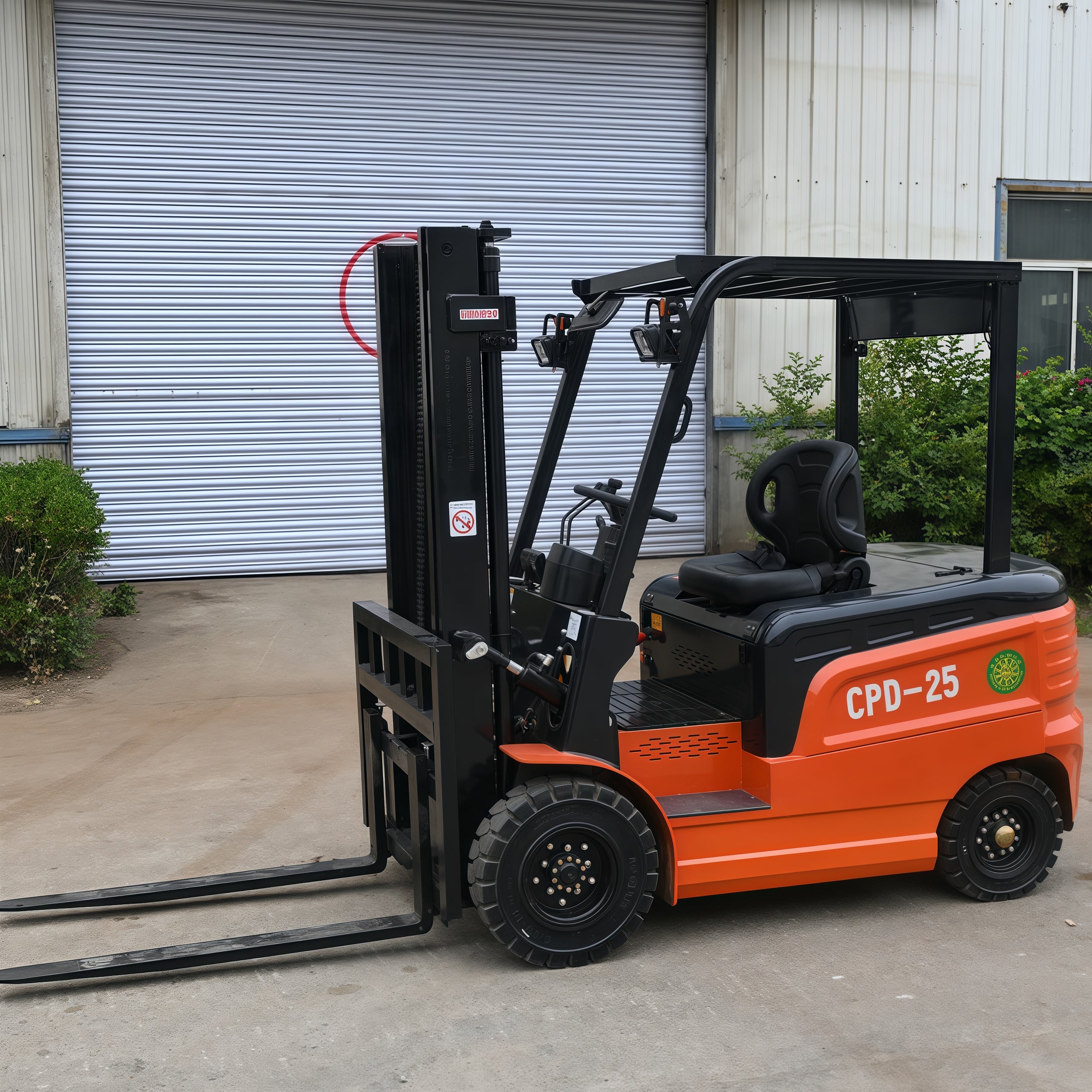
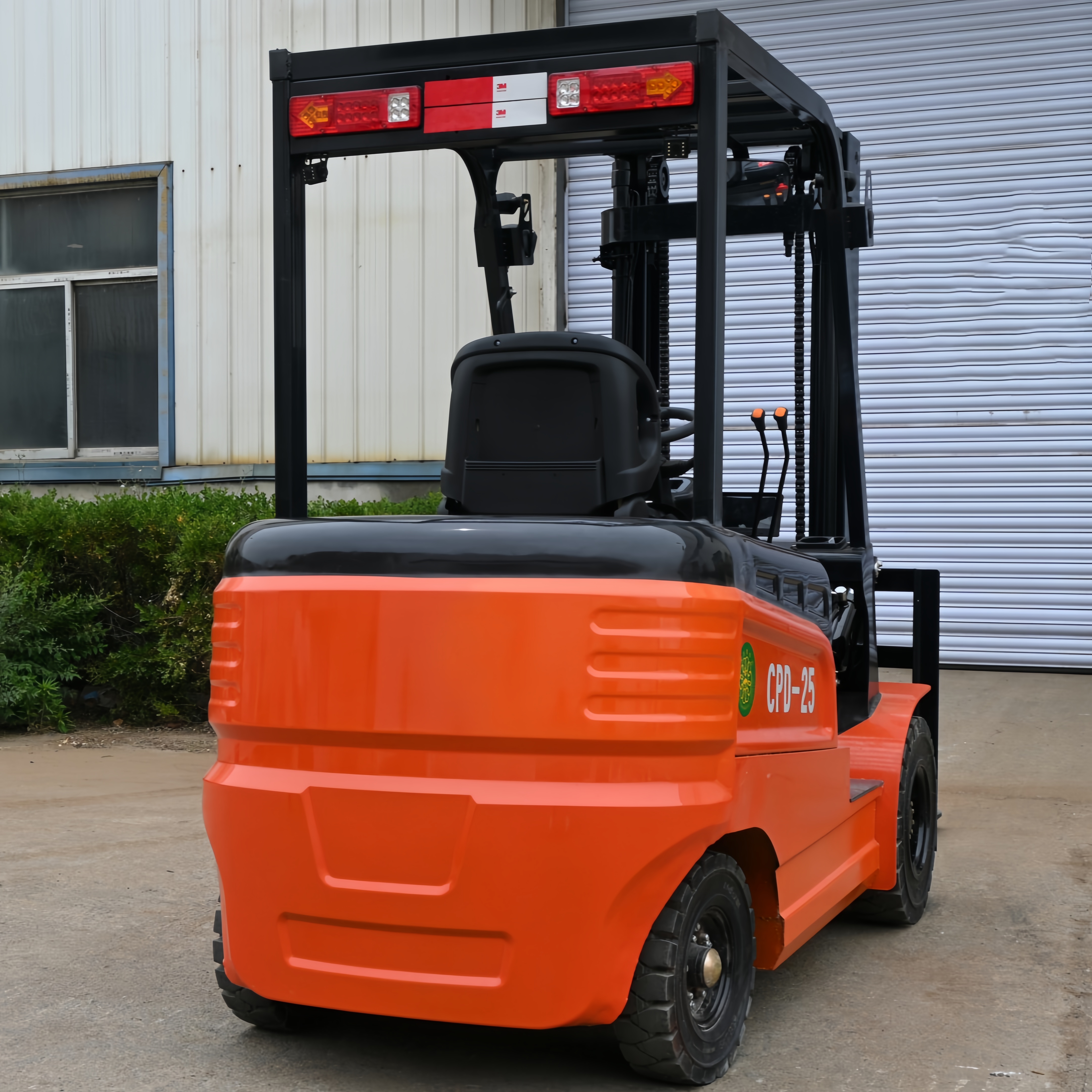
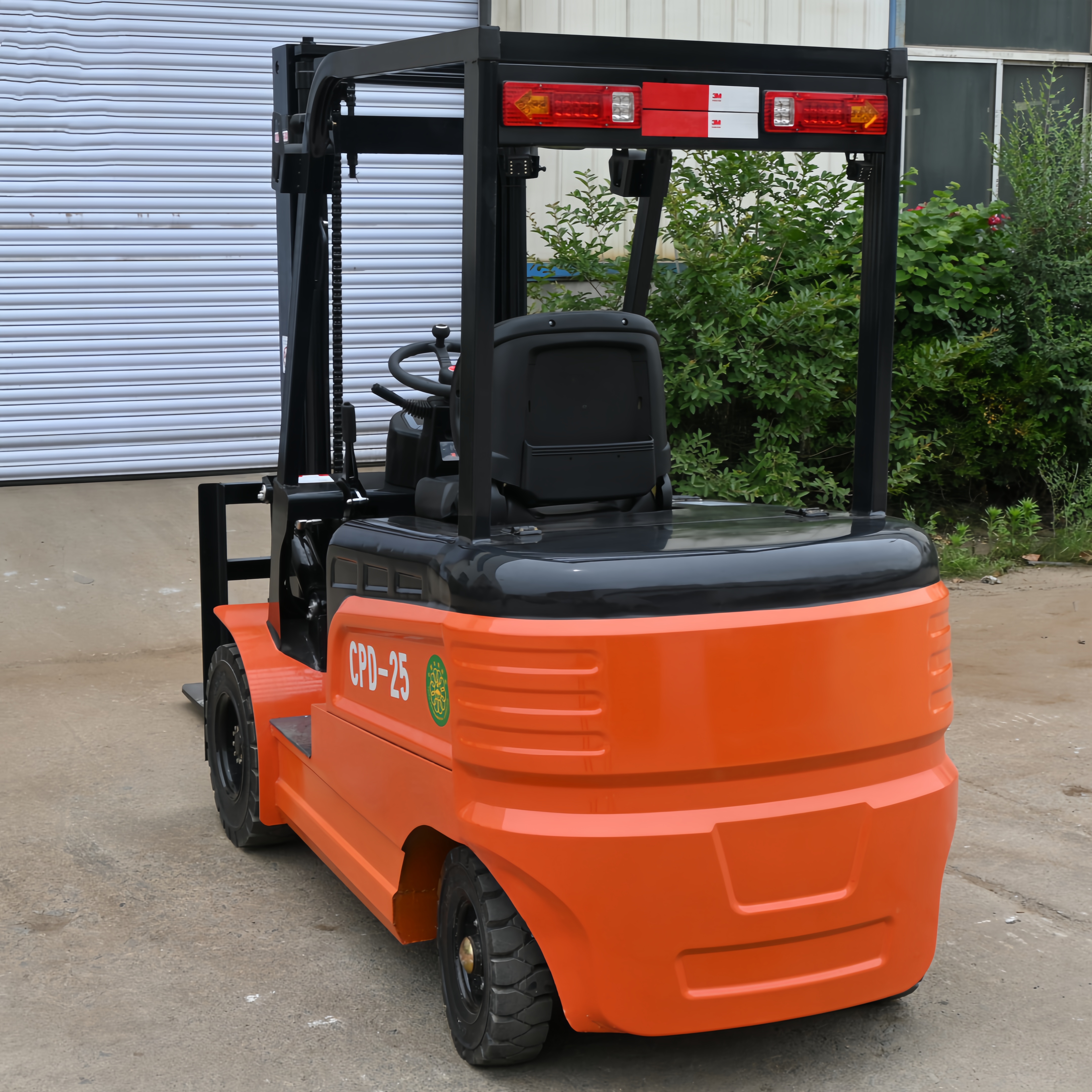
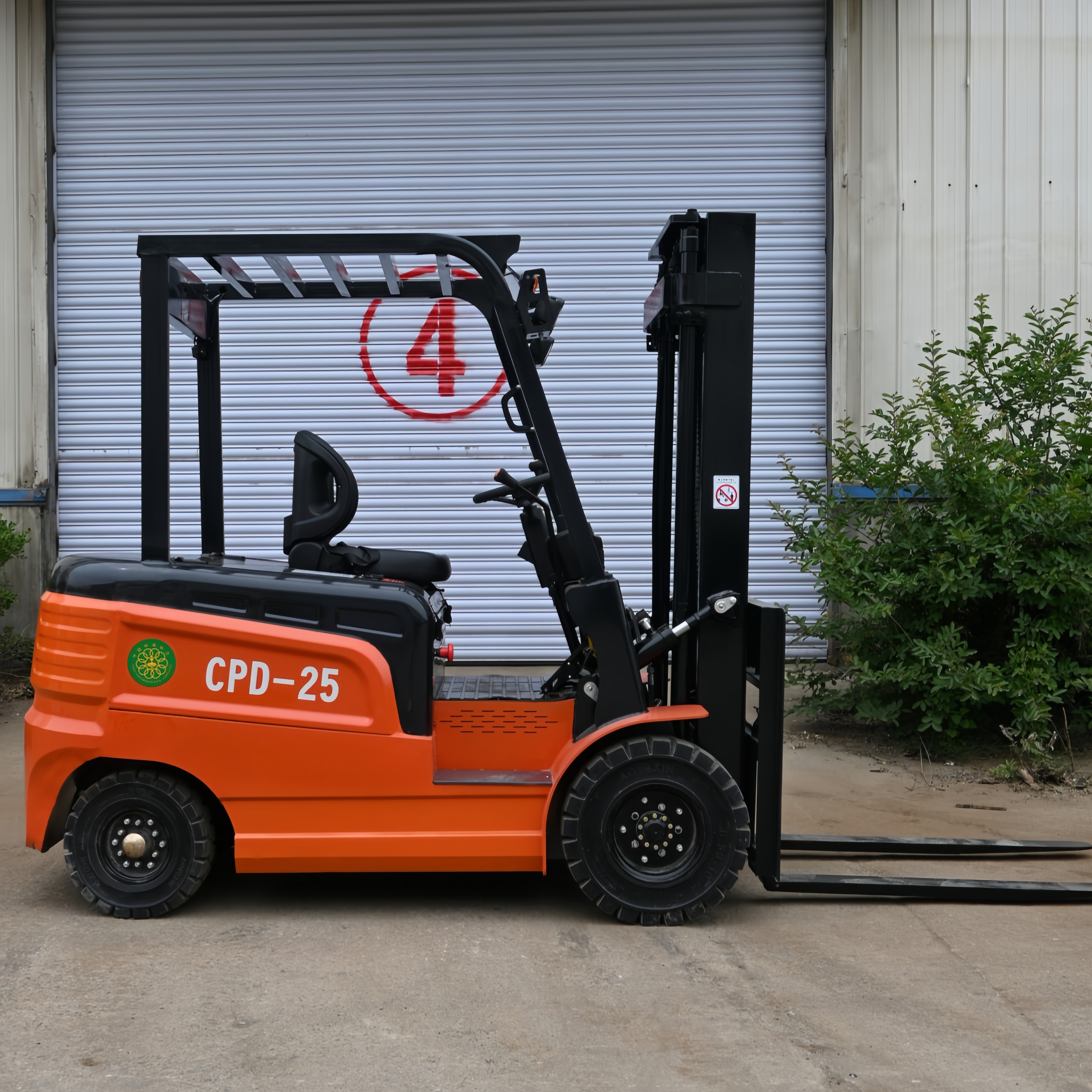
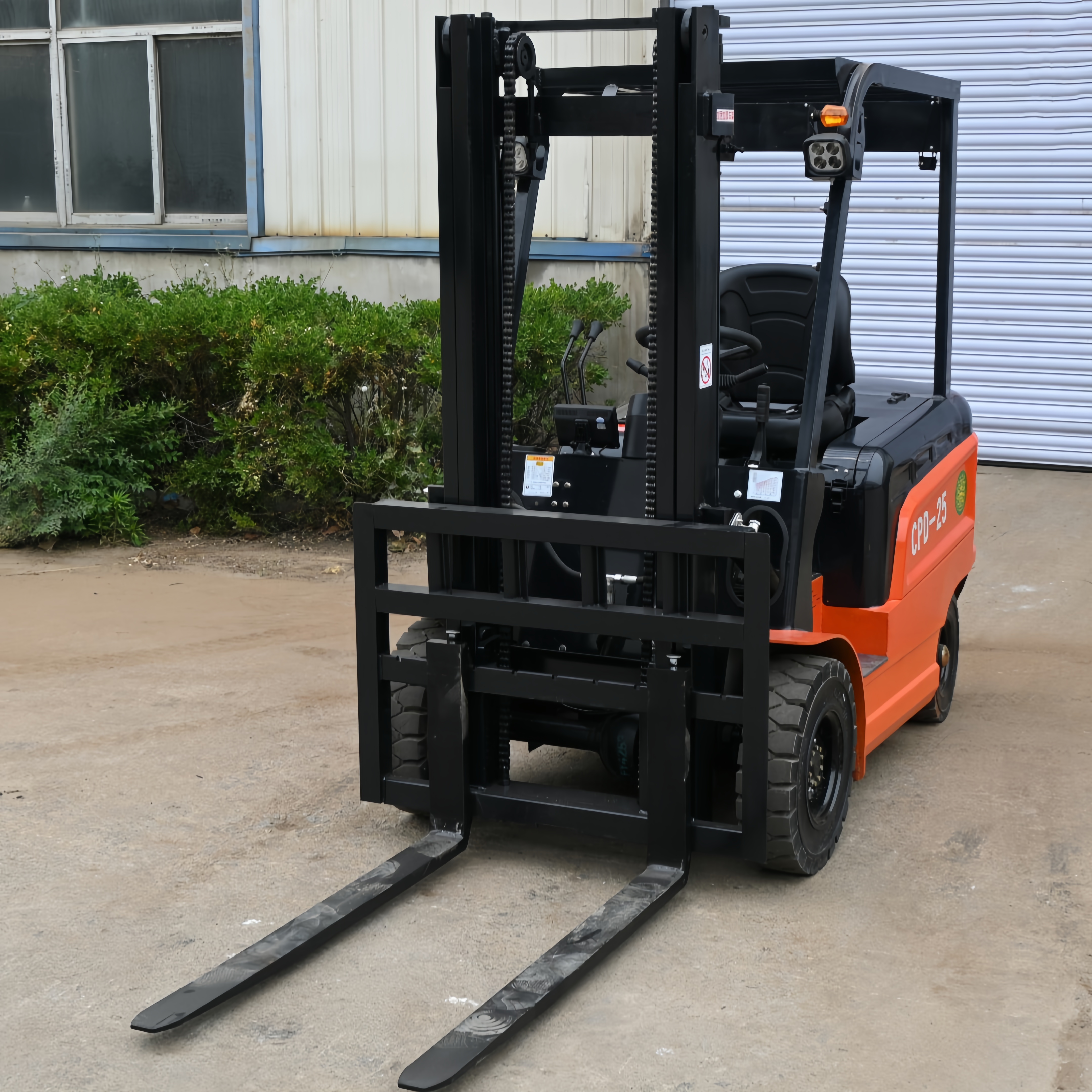
2.5-ton electric forklift bridges standard warehouse duties and demanding industrial applications.
Heavy Performance
Lifts 2,500kg (5,000 lbs). Handles dense, heavy loads with robust electric power.
Zero Emissions
Clean electric operation ideal for indoor and environmentally sensitive worksites.
Strength & Efficiency
Combines industrial strength with endurance and energy efficiency for critical operations.
The 2.5-ton (5,000 lbs or 2,500 kg) electric forklift represents a significant step up in the material handling hierarchy, engineered to bridge the gap between standard warehouse duties and more demanding industrial applications. This machine combines the zero-emission benefits of electric power with the robust performance required for heavier, denser loads, establishing itself as a vital asset for operations where strength, endurance, and efficiency are paramount.
Power and Drive System: These models are typically powered by high-capacity 48V or, more commonly, 80V electrical systems. This provides the necessary torque for strong acceleration and the ability to handle gentle grades with a full load. The precise control of the AC motor is crucial for the safe and careful placement of valuable heavy items.
Maneuverability and Stability: Despite its size, it is engineered to maintain a manageable footprint, though its turning radius may be larger than smaller models. The chassis and mast are heavily reinforced to handle the stresses of maximum loads. Stability is enhanced by a low center of gravity, primarily achieved through the strategic placement of the large, heavy battery.
Power Source – Battery Technology: The energy requirement for a 2.5-ton model is substantial, making the battery choice a critical economic decision.
Lead-Acid Batteries: A lower initial investment. For multi-shift operations, this almost certainly requires a battery swap system, involving additional batteries, charging space, and labor costs.
Lithium-Ion Batteries: Highly recommended for this capacity class. They enable fast opportunity charging during shifts, completely eliminate the need for battery swapping and watering, and provide consistent power output until fully depleted. This results in maximum uptime and a lower total cost of ownership despite a higher initial price.
Operator Ergonomics and Safety: Operator comfort is paramount for productivity and safety when handling heavy loads. The cabin is designed with enhanced features like a high-back suspension seat, low-effort hydraulic controls, and excellent all-around visibility. Advanced safety systems are standard, including a reinforced overhead guard, a reliable load moment indicator, and a comprehensive braking system.
Economic and Environmental Efficiency: The economic advantages of electric power are magnified at this capacity level. The savings on electricity compared to fossil fuels are significant. Maintenance costs are drastically lower due to the absence of an internal combustion engine, complex transmission, and associated fluids and filters. This results in a vastly superior Total Cost of Ownership (TCO). Furthermore, its zero local emissions ensure a cleaner and safer work environment, contributing directly to corporate sustainability targets.
In conclusion, the 2.5-ton electric forklift is a powerful and intelligent investment for any business dealing with heavy-unit loads. It delivers the muscle required for demanding industrial tasks while providing the clean, quiet, and cost-effective operation that defines modern material handling. It is a key enabler of productivity, combining brute strength with operational precision and environmental responsibility.
Applications:
The 2.5-ton capacity makes this forklift suitable for a range of heavier-duty tasks across various industries. Its power and stability allow it to operate effectively in both indoor and protected outdoor environments.
Heavy Manufacturing and Steel Distribution: This is a primary application area. The forklift is perfectly suited for handling heavy raw materials, machinery components, and finished products like steel coils, large metal fabrication, and industrial equipment.
Construction Supply and Timber Yards: It efficiently moves heavy building materials such as bags of cement, bricks, packs of roofing tiles, and large timber pallets around yard warehouses and loading bays.
Port Operations and Intermodal Facilities: It serves as a versatile tool for handling heavier general cargo within port sheds and for loading and unloading containers on trucks, especially where 20-foot containers with dense goods are common.
Beverage and Bulk Wholesale: For distributors dealing in full pallets of bottled liquids or canned goods, which can be extremely dense, the 2.5-ton capacity provides a necessary safety margin and handling capability.
Heavy Logistics and Freight: It is the ideal machine for freight terminals and distribution centers that manage a wide variety of heavy goods, ensuring they have the capacity to handle the vast majority of incoming and outgoing palletized freight.
In short, the 2.5-ton electric forklift is the go-to solution for businesses whose daily operations consistently involve loads that would be at or beyond the comfortable limit for smaller 1.5 or 2-ton models.
Core Functions and Roles:
This forklift is designed to perform all fundamental material handling tasks, but with enhanced capability for heavier weights:
High-Bay Storage of Dense Goods: It can lift 2.5-ton loads to significant heights (typically 5-7 meters), making it essential for warehouses storing heavy products in racking systems.
Intensive Horizontal Transport: Its robust construction allows for the reliable and safe movement of heavy loads over longer distances within a facility, such as from a raw material bay to a production line.
Demanding Loading and Unloading: It serves as a primary tool for efficiently unloading heavy goods from shipping containers and high-capacity trucks, minimizing dock turnover time.
Handling with Specialized Attachments: Its high capacity makes it an excellent base for powerful attachments like roll clamps for paper or steel, carton clamps, or fork positioners, expanding its versatility for non-palletized loads.
Advantages:
1.It produces zero emissions, making it perfectly safe and eco-friendly for indoor use in warehouses and food processing plants.
2.The electric motor operates much more quietly than internal combustion engines, significantly reducing noise pollution in the work environment.
3.It offers substantially lower operating costs due to cheaper electricity compared to fossil fuels and requires less maintenance.
4.The electric power provides instant torque for smooth and precise lifting and handling, enhancing operational control.
5.With fewer moving parts and no need for engine oil or filters, it ensures cleaner operation and reduces long-term maintenance expenses.
| Rated Load Capacity | 2.5 T |
| Overall Length (with fork) | 3820 mm |
| Overall Width | 1180 mm |
| Overall Height | 2150 mm |
| Max Lifting Height | 3000 mm |
| Mast Tilt Angle (Front/Rear) | 7°/13° |
| Full Load Lifting Speed | 18 mm/s |
| Max Gradeability (Loaded) | 30% |
| Operating Weight | 3400 kg |
1. Q: What is the biggest advantage of choosing an electric forklift over a diesel or LPG one?
A: The biggest advantages are significantly lower operating costs and zero emissions. Electric forklifts are cheaper to run (electricity vs. fuel), require less maintenance, and are clean and quiet, making them perfect for indoor use.
2. Q: How long can it operate on a single charge?
A: A fully charged battery typically powers an electric forklift for a standard 8-hour single shift. Actual runtime depends on the application, load, and how intensively it's used.
3. Q: What's the difference between Lead-Acid and Lithium-Ion batteries?
A: Lead-Acid: Lower upfront cost but requires regular maintenance (watering) and a dedicated charging area. It has a shorter lifespan.
Lithium-Ion: Higher initial investment but offers zero maintenance, faster charging, and a longer lifespan. It can be "opportunity charged" during breaks without damaging the battery.
4. Q: Are electric forklifts powerful enough for heavy loads?
A: Yes. Modern electric forklifts are highly powerful and can handle heavy loads, often matching or exceeding the capacity of internal combustion engine forklifts. They provide consistent power and excellent performance.
5. Q: The upfront price seems high. How is it a better value?
A: While the initial purchase price can be higher, the Total Cost of Ownership (TCO) is much lower. You save massively on fuel, and reduced maintenance (no oil, filters, or spark plugs) leads to a strong return on investment over time.
6. Q: What kind of maintenance do they need?
A: Maintenance is much simpler. It mainly involves checking brakes, tires, and hydraulics. If you choose a Lead-Acid battery, regular watering and cleaning are required. Lithium-Ion batteries eliminate this maintenance entirely.
7. Q: Can I use it outdoors?
A: Electric forklifts are primarily designed for smooth indoor surfaces. However, many models are equipped with pneumatic tires and are robust enough for outdoor use on paved yards. They are not typically designed for rough, muddy terrain.
8. Q: How long does it take to recharge the battery?
A: A full recharge for a depleted Lead-Acid battery typically takes 8-10 hours. Lithium-Ion batteries charge much faster, often reaching full charge in just 2-3 hours, and can be partially charged during short breaks.
9. Q: Is it true that they are safer?
A: Yes. With no combustible fuel and zero emissions, they eliminate the risks of fire, fumes, and carbon monoxide poisoning indoors. Their quieter operation also improves awareness, though standard warning alarms are still essential for safety.
10. Q: What about the battery disposal at the end of its life?
A: Both battery types are highly recyclable. Lead-acid batteries have one of the highest recycling rates globally. Lithium-ion battery recycling programs are also well-established. We can guide you to certified recyclers to ensure environmentally responsible disposal.
Copyright © Shandong Laite Machinery Co., Ltd.@2025 - Privacy Policy

 EN
EN